
Amala’s Mission
The Amala School of Yoga makes yoga accessible to students from trying to conceive through pregnancy, childbirth and postpartum by creating confident, sensitive teachers and empowering educational programs.
Our Approach
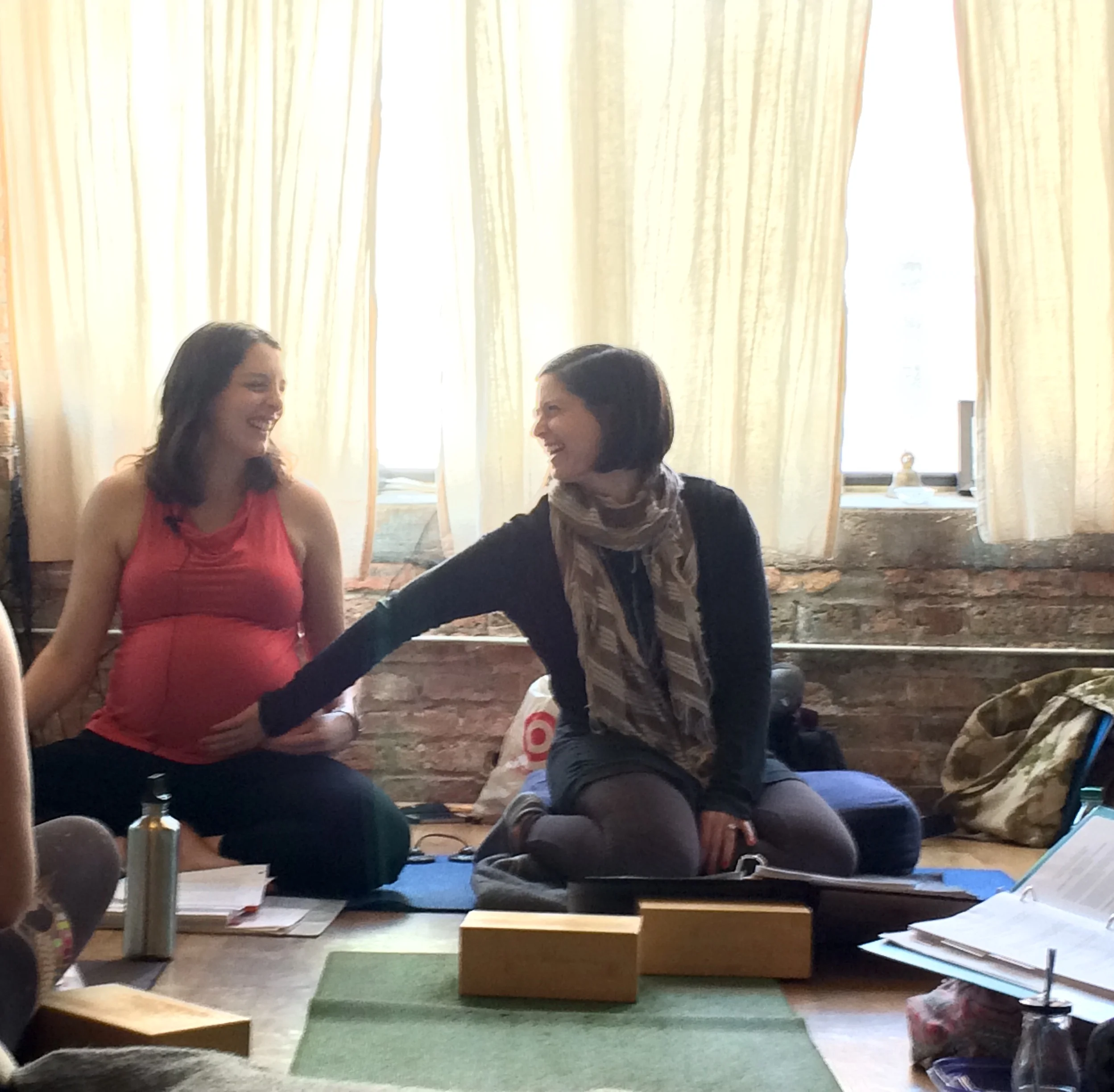
Our trainings, workshops and classes are steeped in the wisdom of yoga and Ayurveda and include modern clinical insights from the physical therapy, nurse midwifery, obstetrical, and perinatal psychology communities.
Our innovative training methods are suited to all styles of learning and belief systems. We provide a high level of learning, mentorship, and community building in our classes that graduates learn how to replicate in their yoga classes.
Amala School of Yoga is a Registered School (RPYS) founded in 2013 by Cassie Rodgers and Lela Beem. We offer courses and programs including our 95 hour Prenatal Yoga Teacher Training ONLINE (at least during the Covid-19 pandemic). The Amala School also offers mentorships, childbirth education, prenatal and postnatal classes, and community resources in the Chicago area.
Statement of Broad Inclusivity
At Amala, we consider our training space a sacred learning environment where the best intentions will be assumed of everyone. In our collaborative classroom, we will allow ample space to explore new ideas together. Rather than mandating a specific way of speaking or of practicing yoga, we believe that the most effective learning happens in an environment where individuals feel free to ask questions, experiment, share experiences, and can be vulnerable to express different opinions without fear of shame and are received compassionately by trainees and faculty.
Gender Identities
We recognize and value the range of gender identities and welcome all people to take this training. You may see or hear faculty refer to individuals in any stage of pregnancy as 'mother' or ‘woman’ as well as ‘person’, ‘student’ or ‘client’ in this training.
We encourage our trainees to understand the importance of explicitly welcoming genderfluid and non-binary individuals into their classes as well as continuing to be explicitly welcoming to those who identify as women/female. We provide examples of how to develop trusting relationships with your clientele that will allow you to navigate this cultural and linguistic evolution with more ease.
Racial Disparities
We recognize that Black women are up to three times as likely to die in childbirth as white women. Their rates of postpartum mortality are also significantly higher than other ethnic and racial groups in this country. We provide resources for our trainees to learn more about these health disparities and ways to support Black families in having the healthiest and most positive outcomes possible.
Building Empathy & Partnerships
We trust you to act and speak respectfully and with kindness to fellow trainees, faculty members and above all, to your clients, who place in you the utmost confidence. This is at the heart of our trauma-sensitive approach to training teachers and teaching clients. We encourage students and the teachers alike to create an open dialogue that invites all parties to express their needs and expectations. We model the use of appropriate touch and always allow people opportunities to opt out of certain suggestions.
We encourage our trainees to make themselves and their expertise available to groups who might not traditionally have access to yoga whenever possible. We recognize that it is not always feasible to volunteer, but that there is deep value in creating partnerships with organizations who support those living in poverty or with high-stress circumstances that add vulnerability to the already challenging perinatal life stage.
Within our program is an opportunity for our students to spend ten of their training hours researching a topic related to working with clients who are trying to conceive, pregnant or postpartum. This is where we encourage trainees to dive deeper into their areas of particular interest and advocacy work. We recommend a host of places and mentors where trainees can gain more insight into working with specific cultural groups, LGBTQ+, trauma-sensitive training and more.